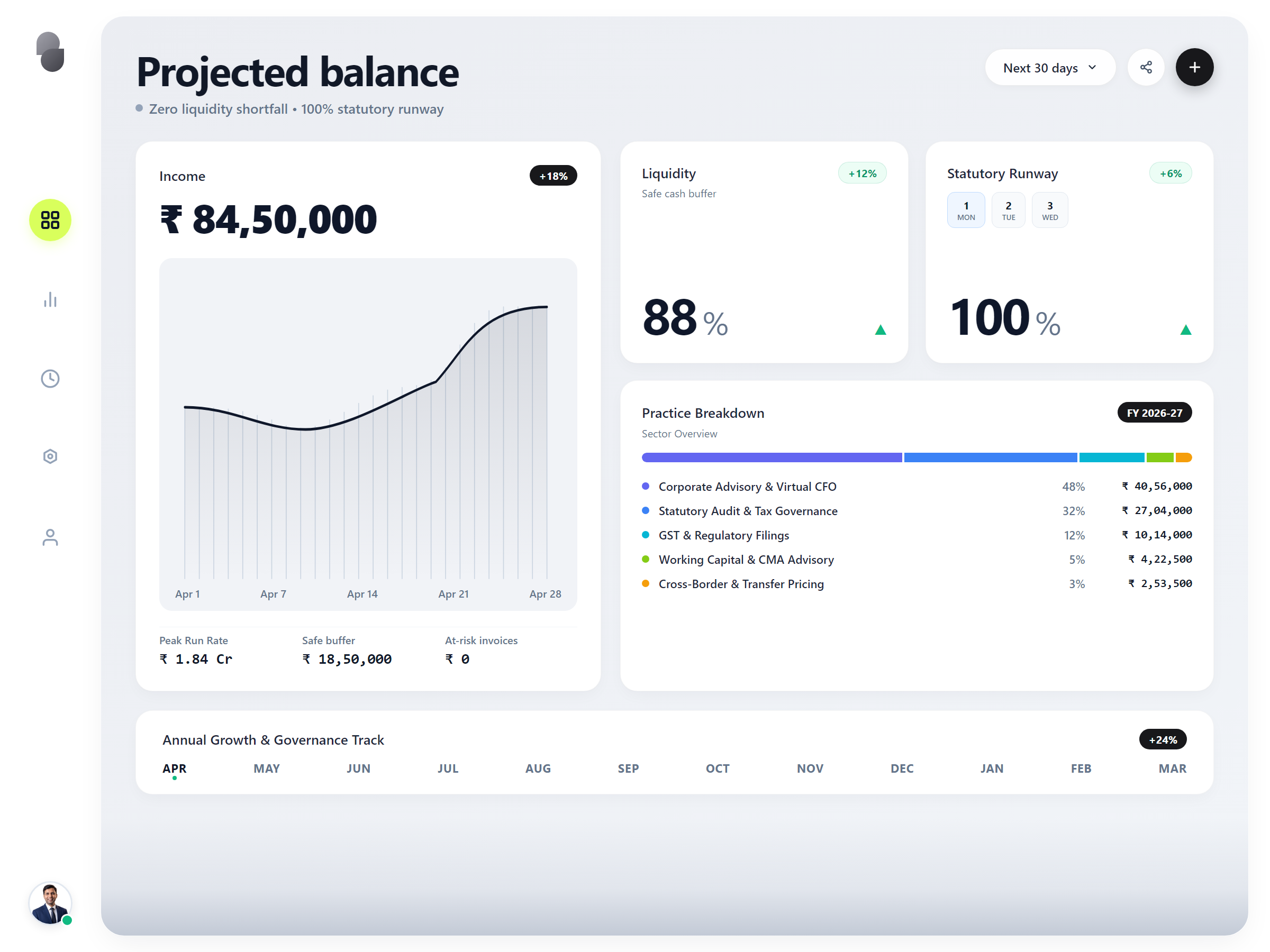
Five Management Reports (MIS) & Financial KPIs Every Business Leader Must Review Monthly
Risk Mitigation & Solvency

Drowning in operational data but starving for financial clarity? A practical framework for designing an executive Management Information System (MIS) dashboard tailored for Indian company directors and promoters.
"“What cannot be measured cannot be managed. What cannot be reviewed monthly cannot be protected from financial erosion.”"
The Core Five Executive MIS Reports
- 1. Revenue & Gross Contribution Variance: Segment-wise revenue tracked against planned budget, isolating volume changes from discounting and pricing concessions.
- 2. Debtor Aging Matrix (30-60-90+ Days): Identifying sticky receivables before they degenerate into irrecoverable bad debts under Section 36(1)(vii).
- 3. OPEX Run-rate & Overhead Inflation: Monthly departmental cost comparisons highlighting unexplained budget overruns in marketing, technology, or legal fees.
- 4. Cash Runway & Treasury Dashboard: Total liquid bank deposits, committed debt servicing for next 60 days, and net available working capital.
- 5. Statutory Tax Provisioning Status: Accrued liabilities for GST, TDS, advance corporate tax, and PF/ESI contributions to avert surprise year-end cash drains.
Conducting the Monthly MIS Review Ritual
Reviewing the MIS must be scheduled on or before the 10th of every month. Promoters, operational department heads, and Virtual CFO advisors should spend 45 focused minutes analyzing variances between targets and actual results, assigning immediate ownership for corrective operating measures.
📋 Professional Practice Advisory Note
Lav K Sharma & Co., Chartered Accountants delivers specialized Virtual CFO advisory, corporate debt structuring, statutory audit management, and direct tax compliance across India. For confidential consultation with our partners, connect directly with our office.
The 13-Week Rolling Cash Flow Forecast
Annual budgets are insufficient for managing working capital volatility. Well-run corporate finance desks rely on a rolling 13-week cash flow model updated every Monday morning:
- Weeks 1 to 4 (Deterministic): Known customer collection commitments, confirmed payroll obligations, statutory tax liabilities, and fixed vendor payouts.
- Weeks 5 to 8 (Operational): Anticipated project billing milestones, scheduled raw material purchases, and advance tax tranches.
- Weeks 9 to 13 (Strategic): Projected seasonal sales inflows and planned capex disbursements.
By rolling this 13-week projection forward each week, a liquidity shortfall is visible 8 to 10 weeks in advance—providing ample runway to adjust procurement, accelerate debtor recovery, or arrange promoter loans.
See also



Strategic Financial Leadership & Advisory
Lav K Sharma & Co. delivers Virtual CFO leadership, corporate tax planning, and statutory compliance discipline to growing enterprises across India.